 English
English
English
 English
We hope that your interview appointment went well and that your US visa has been approved. Your passport(s) (including US visa) will be sent to you and your family members in the next few days by post. To ensure that your entry into the USA runs smoothly, we would like to provide you with some helpful information. Finally, please note the following important information:
After receiving your passport, please check the individual data and the photo on your visa for accuracy. Occasionally, errors may occur when issuing visas.
The following diagram explains the individual details on your visa:
Please check the following points in particular:
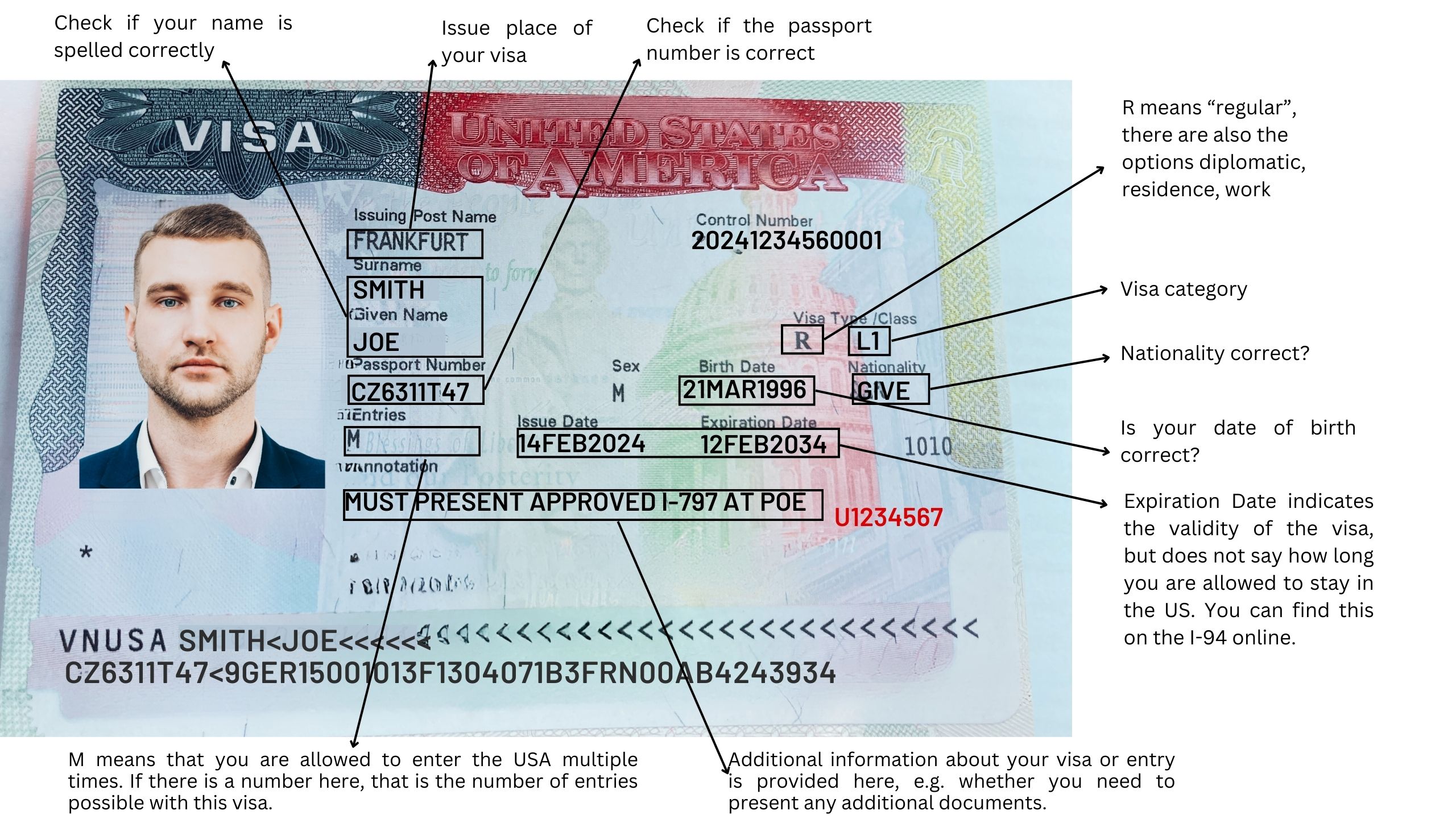
Please send us a copy of your visa for verification immediately upon receipt! If the information on your visa is incorrect (e.g. your name or date of birth), the visa must be sent to the US consulate by post with a request for correction before you plan to enter the country. In this case, you do not have to appear in person again. If you only notice the error after you have entered the USA, you will usually have to return to the consulate in person after your return from the USA to correct it (reapplication). If you enter the country with an incorrect visa, you may encounter problems at the border and may even be refused entry!
If you use your visa to enter the USA, you do not need ESTA approval. This is only required for travel under the Visa Waiver Program (i.e. without a visa). If you already have an ESTA authorization or have already arranged for one, this is not detrimental to your entry.
If you are the holder of a work visa (e.g. E, L, H visa) or a B-1 (business traveler) visa and are travelling to the USA for purely tourist purposes, we recommend that you apply for ESTA approval in advance of your trip as a precaution, even if you have a valid visa. Your purely private reason for entry is not necessarily covered by the work visa or B-1 visa.
B-1/B-2 visa holders are not affected by this, as this visa covers a purely tourist stay (B-2) in addition to a business trip (B-1). You can apply for an ESTA authorization at https://esta.cbp.dhs.gov/esta!
How long your passport must be valid for entry into the USA depends on your nationality. In principle, every passport must be valid for at least 6 months from the date of departure from the USA.
However, the majority of certain nationalities fall under an exemption ("Six-Month Club") - this also includes visa holders from Germany, Austria or Switzerland. They only need a passport that must be valid for the duration of the planned stay. You can find a list of all countries that fall under this regulation here: https://www.cbp.gov/document/bulletins/six-month-club-update
If your passport expires and your visa is still valid, you do not need to apply for a new visa. You can then continue to travel to the USA by presenting both passports (new passport and old passport including valid US visa).
If the following changes occur, you must apply for a new US visa and a new passport:
Please note that the Automated Passport Control Program (APC), which has been set up at some US airports for expedited clearance, is only available to visa waiver travelers (VWP - ESTA) and B-1/B-2 or C-1/D holders. All other travelers with US visas cannot use these machines.
Simplified entry with Global Entry is possible for members with all current visa categories (except C, H, K, M, N, Q, S, T or U visas). Global Entry program participants are obliged to keep their personal information up to date via their Global Entry account (e.g. when receiving a new passport).
If a Global Entry member receives a (new) visa and/or e.g. a new petition (I-129S or I-797 Approval Notice), they must personally inform U.S. Customs and Border Protection (CBP) and have this data (re)entered into the Global Entry System. As a rule, this is done directly at the airport with the (new) visa documents when entering the country for the first time and in person at an Enrollment Center.
If the visa information has not been completely or properly updated, there is a risk that the entry status (duration of the residence permit and visa category) will be incorrectly determined at the Global Entry Kiosk, which can lead to further problems. Further information can also be found here: https://ttp.cbp.dhs.gov/.
We are happy to assist you with your Global Entry Program application, provided you qualify for the program. Please feel free to contact us.
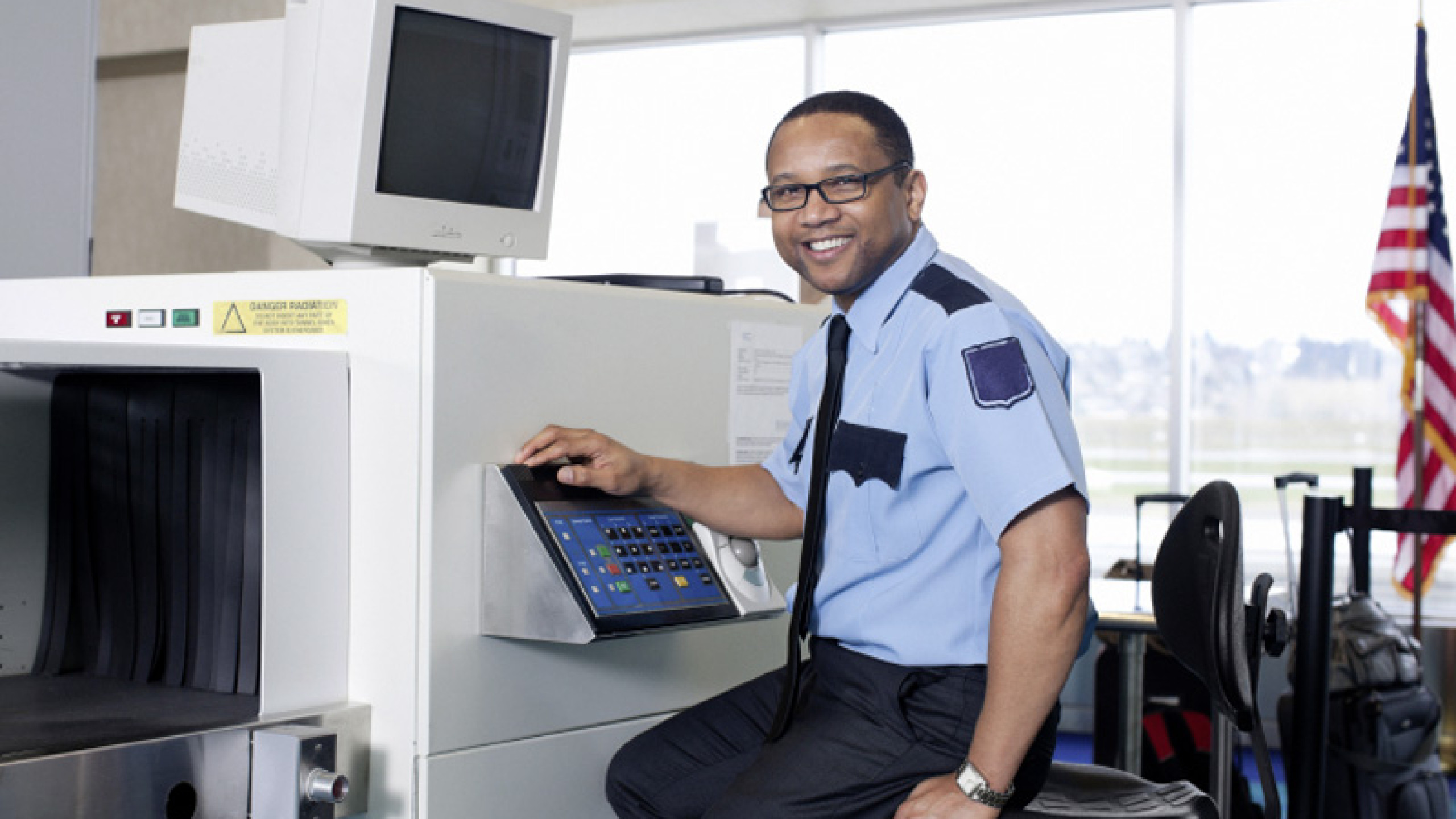
After arriving in the USA, you will first go through immigration control. Here it is checked whether all entry requirements have been met.
What you can expect:
Fingerprints and photo: Please note that all 10 of your fingerprints will be taken again at the border and a digital photo will be taken.
Questions about entry: In addition, US Customs and Border Protection (CBP) officers will ask you a few questions. Typical questions include: “What is the purpose of your trip?”, “How long will you be staying in the US?” or “Where will you be staying?” Answer these questions honestly and calmly. The questions you are asked will depend largely on your visa category (e.g., study visit, work, business trip, etc.).
Border officials are free to subject you to a more intensive interview (secondary inspection) at any time if they have any doubts, to search your carry-on luggage, or to request access to your laptop or cell phone, for example.
The validity period on your visa only specifies the period during which you may use this travel document. However, a visa does not guarantee you entry. Whether you are allowed to enter with your visa and for how long is decided by border officials.
Before 2013, travelers had to fill out the I-94 arrival/departure record form on the plane or at the border. The final date of departure was then noted with a stamp in the passport. In recent years, this has all been digitized.
You only need to present your passport (including your US visa and any other documents depending on your visa category) to the border officials. Your personal data is recorded by scanning your passport. All your information is recorded electronically in the US authorities' system.
Travelers now only receive an entry stamp in rare cases. After entering the country, be sure to check your current electronic I-94 online for accuracy and check when you must leave.
Only the electronic I-94 for your current stay can be accessed online. It is also possible to view a “travel history” of past stays.

Your residence status does not always correspond to the validity of your visa. This means that your status may be valid for longer or shorter than your visa.
The decisive factor for how long you are allowed to stay in the country is always the date entered on your entry stamp or in the electronic I-94 (not the validity of your visa). All relevant information about your residence status is stored there (I-94 number, name, date of birth, passport details, visa category, date of entry, and the date by which you must leave the US at the latest).
For certain visa categories (F-1, J-1), no specific departure date is noted, but rather “D/S” for “duration of status.” The validity of the I-20 or DS-2019 forms is decisive for these visa categories.
It is also possible to print out a copy of the electronic I-94 form. Therefore, always check carefully after entry how long your stay has been granted.
If you want to apply for a Social Security Number (SSN) from the Social Security Administration (SSA) and/or an American driver's license, you will usually need a printout of the electronic I-94 as proof of your valid residence status.
Please note that only your I-94 in combination with your US visa documents your legal status in the United States.
Check online, the following the data in your I-94 form:
If you notice any errors in your I-94, try to ask for corrections directly at the airport/border.
If you remain in the USA beyond your authorized stay (overstay), you can expect negative consequences. These range from having to reapply for a visa to deportation or entry bans lasting several years.
| Passport incl. visa |
Customs declaration form 6059B (you will receive this when you enter the country) |
Cover letter | I-20* | DS-2019** | I-129S*** | I-797 Approval Notice* | |
| B-1 | X | X | Recommendation | ||||
| B-2 | X | X | |||||
| B-2/B-2 | X | X | Recommendation | ||||
| C-1/D | X | X | Recommendation | ||||
| E | X | X | |||||
| F | X | X | X | ||||
| H | X | X | X | ||||
| I | X | X | Recommendation | ||||
| J | X | X | X | ||||
| K | X | X | |||||
| L | X | X | X | ||||
| L-Blanket | X | X | X | X (copy) | |||
| M | X | X | X | ||||
| O | X | X | X | ||||
| P | X | X | X | ||||
| TN | X | X |
X = mandatory for every entry
* = mandatory in original or copy for each entry
= mandatory in original for each entry
*** = on first entry: Presentation of 2 x I-129S. One copy will be retained. Please note that not all US consulates issue two versions after the appointment. If you have only received one version, please present it accordingly. One I-129S will always remain with you for all future entries.
For a stress-free entry, it is also advisable to have the following documents to hand at all times:
In rare cases, the officials are at liberty to ask you to take part in a more intensive second control ("secondary inspection").
This means that you will be taken from the regular queue to an extra office where the customs or immigration officers will ask further questions, check your documents more closely, search your hand luggage or, for example, ask to see your laptop.
Don't be put off - this is a standard procedure. The secondary check can be carried out for various reasons, e.g. if there are ambiguities in the documents or if random checks are carried out.
A common reason for certain visa categories is a lack of intention to return to your home country, i.e. the accusation that you wish to stay in the USA illegally.
Stay calm and answer all questions honestly.
The immigration check is followed by the customs check. When entering the country, you are allowed to bring certain personal items duty-free, such as clothing or electronic devices. However, strict restrictions apply to certain products, such as tobacco and alcohol:
Food: The USA has very strict regulations when it comes to importing food. Fresh fruit, vegetables, meat and certain other products are often prohibited. You should therefore avoid bringing such products with you.
Cash: If you are carrying more than USD 10,000 or the equivalent in another currency, you must declare this when entering the country. This rule also applies to traveler's checks or other means of payment.
Medication: If you are carrying prescription medication, it should be in its original packaging and ideally accompanied by a doctor's note or prescription. Certain medications that are legal in your home country may be subject to restrictions in the USA, so it is advisable to check this in advance.
Alcohol and tobacco: Travelers over the age of 21 may bring up to 1 liter of alcohol and 200 cigarettes or 50 cigars duty-free. If you wish to bring more, additional fees may apply.
Souvenirs and gifts: Gifts or souvenirs that you bring into the USA during your trip are subject to an exemption limit of 100 US dollars.
Once you have cleared immigration and customs, you can collect your baggage and continue your journey. If you have a connecting flight in the USA, please note that you may have to check in your baggage again after you have gone through customs. It is best to find out about the exact procedure from your airline in advance.
We strongly recommend that you make a digital copy of your US visa, which you will have access to during your trip.
If you lose your passport (including visa), it is much easier to reissue it and document your legal residence status.
As a foreign citizen in the USA, you are also obliged to prove your legal residence status to the US authorities at all times (e.g. during a police check). If you do not wish to carry your passport with you at all times, at least carry a copy of your visa plus entry stamp or a copy of the electronic I-94 form. This will help prevent possible problems.
The United States does not have an official reporting system. However, individuals who are staying in the US on a non-immigrant visa and move within the United States are required to notify the U.S. Citizenship and Immigration Services (USCIS) of their (new) private US address within 10 days. This ensures that all foreign nationals are (at least theoretically) reachable by the US authorities.
Exempt from this regulation are persons who have entered the US under the Visa Waiver Program (ESTA) and persons who are staying in the US for no longer than 29 days. For more information on how to notify USCIS of your change of address, please visit https://www.uscis.gov/addresschange.
Please take this notification requirement very seriously. Failure to comply may result in fines or, in the worst case, deportation.
If you stay in the USA beyond your approved residence status (overstay), you can expect negative consequences. These range from reapplying for a visa to deportation or an entry ban lasting several years.
You must leave the US no later than the date of departure noted on the entry stamp or electronic I-94.
Your timely departure is recorded via the respective travel information of the airlines or shipping companies. They will transmit your travel data digitally directly to the US authorities after you leave the United States. You therefore do not need to make any further arrangements.
Only individuals who have received a paper I-94, for example as part of a status extension, must ensure that they hand in the section of the I-94 in their passport or on the I-797 Approval Notice at the border when leaving the country. If you forget to hand in the I-94 section, please let us know. We will then send you all the necessary information on how to document your correct departure retrospectively.
If you arrived in the USA by plane or ship and are leaving the USA by land via Mexico or Canada, we recommend that you have an entry stamp from the Mexican or Canadian authorities (as proof of timely departure) stamped in your passport.
If you have any questions, please contact our team on +49 (30) 398 20 40 00.
We wish you all the best and every success for your stay in the USA!
Your US Visa Service Team
We and our partners use cookies to store and retrieve personal data such as browsing data, to provide and personalize content and advertising, and to analyze website usage and improve the user experience. You can find out more about the purposes for which we and our partners use cookies by clicking on the “Cookie settings” button below. All settings can also be changed here. You can change your cookie selection or withdraw your consent at any time by clicking on the link to the cookie settings in the footer of our website. Please note that blocking some types of cookies may affect our ability to provide content tailored to your interests or limit some of the website's functions.
By clicking on “Accept all cookies”, you consent to our use of cookies and the sharing of your data with our partners.